


Nlyte Integration Services
Deploy, integrate, and configure your DCIM platform for faster adoption and measurable operational value.
Used by the Largest and Most Sophisticated Data Center Leaders in the World






Integration and Deployment Are Where Value Begins
Buying a DCIM platform does not create value on its own. Value appears when the platform connects to your systems, reflects how your teams work, and supports day-to-day decisions.
Integration and deployment determine success or failure. A poor rollout delays adoption. Incomplete integration creates blind spots. Misaligned configuration frustrates users.
Nlyte approaches DCIM integration deployment as a structured program, not a technical task. The goal is simple. Get the platform live, trusted, and used.
This page explains how Nlyte supports system integration, implementation and rollout, and platform configuration. It shows how these steps reduce risk, accelerate outcomes, and support long term optimization initiatives such as DCOI.


Why Integration and Deployment Matter
Many organizations underestimate deployment effort. They focus on features and dashboards. They assume integration will “just work.”
In practice, integration and deployment answer hard questions:
- Where does authoritative data live
- How do systems stay aligned over time
- Who owns configuration decisions
- How do teams adopt new workflows
When these questions go unanswered, DCIM becomes shelfware.
Nlyte solves this by treating DCIM integration deployment as a guided journey with clear phases, ownership, and outcomes.
A Proven Deployment Framework
Nlyte uses a phased deployment model. Each phase builds confidence and momentum.
The framework includes:
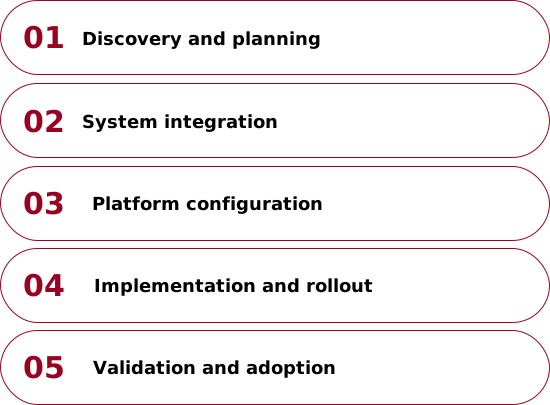
This structure keeps projects on track. It also ensures stakeholders stay aligned from start to finish.
Discovery and Planning Set the Foundation
Every successful deployment starts with discovery.
During this phase, Nlyte works with your team to understand:
- Business objectives and constraints
- Existing systems and data sources
- Organizational roles and workflows
- Reporting and compliance needs
Discovery prevents assumptions. It clarifies priorities.
Instead of deploying everything at once, teams define what matters most. This focus accelerates time to value.
System Integration Connects Your Environment
Data centers rarely operate in isolation. They rely on many systems.
System integration ensures DCIM fits into your ecosystem.
Nlyte integrates with common platforms, including:
- Asset management systems
- Building management systems
- Power monitoring tools
- Service management platforms
- Financial and billing systems
Integration eliminates duplicate data entry. It also improves trust in the platform.
When data flows automatically, teams rely on it.

Open Architecture Supports Flexibility
Nlyte uses open interfaces to support integration.
This approach offers several benefits:
- Easier connection to existing tools
- Reduced vendor lock in
- Support for future system changes
Organizations keep control of their data. They choose how and where it flows.
This flexibility is essential for long-term success.
Implementation and Rollout with Minimal Disruption
Implementation should not disrupt operations.
Nlyte designs rollouts to match operational realities.
Common rollout approaches include:
- Pilot deployments in selected areas
- Phased expansion across sites
- Parallel operation with legacy tools
These approaches reduce risk. They also allow teams to learn and adjust.
Implementation focuses on progress, not perfection.
Guided Rollout Builds Confidence
Nlyte provides structured guidance during rollout.
This includes:
- Clear milestones
- Defined responsibilities
- Regular checkpoints
Teams know what to expect. Leaders know where the project stands.
This transparency builds confidence and maintains momentum.
Platform Configuration Aligns with Your Operations
Configuration determines usability.
A platform that does not reflect how teams work will not gain adoption.
Nlyte configures the platform to match:
- Organizational structure
- Naming conventions
- Approval workflows
- Reporting needs
This alignment reduces friction.
Users see familiar terms and processes. They trust the system faster.


Role Based Configuration Improves Adoption
Different users need different views.
Nlyte supports role-based configuration for:
- Operations teams
- Facilities managers
- Finance and planning
- Executive leadership
Each role sees relevant data. Each role performs tasks without unnecessary complexity.
This design supports daily use.
Supporting DCOI and Optimization Initiatives
Integration and deployment play a critical role in DCOI and optimization programs.
Accurate reporting depends on consistent data. That data comes from integrated systems and correct configuration.
Nlyte supports these initiatives by:
- Standardizing data sources
- Automating data collection
- Ensuring reporting consistency
This reduces the manual effort required for audits and reviews.
Data Quality Drives Trust
Trust determines adoption.
If users doubt the data, they avoid the platform.
Nlyte addresses data quality during deployment by:
- Validating data sources
- Resolving conflicts
- Establishing ownership
These steps ensure the platform becomes a trusted reference point.
Trust turns users into advocates.
Change Management Is Part of Deployment
Technology change requires people change.
Nlyte includes change management in DCIM integration deployment.
This includes:
- Stakeholder alignment
- Training sessions
- Clear communication
Teams understand why the platform exists and how it helps them.
This understanding accelerates adoption.


Training Focuses on Practical Use
Training should support real work.
Nlyte training emphasizes:
- Common tasks
- Daily workflows
- Reporting needs
Users learn by doing. They apply skills immediately.
This approach increases retention and confidence.
Scaling After Initial Deployment
Deployment does not end at go live.
Organizations grow. Needs evolve.
Nlyte supports scaling by:
- Adding new sites
- Expanding integrations
- Enabling advanced features
The platform grows with your organization.
This protects your investment.
Long Term Value Through Continuous Improvement
Integration and deployment create the foundation. Continuous improvement builds value.
Nlyte works with customers to:
- Review usage patterns
- Optimize configuration
- Introduce new capabilities
This partnership ensures the platform remains relevant.
Why Nlyte for Integration and Deployment
Organizations choose Nlyte because integration and deployment receive the same attention as software capabilities.
Nlyte delivers:

Proven deployment frameworks

Flexible integration options

Configuration aligned to operations

Support for adoption and scale
This approach reduces risk and accelerates outcomes.


Ready to deploy DCIM with confidence?
Request a demo to see how Nlyte supports integration and deployment in your environment.
Frequently Asked Questions
Latest Resources
Upcoming Webinars
