
We are pleased to announce the Nlyte 16.0.300 Release, now available to customers across the Nlyte platform. This latest system update delivers a wide range of enhancements designed to improve performance, usability, and scalability, while also laying the groundwork for future innovation. With meaningful updates across Asset Optimizer, Energy Optimizer, and System Utilization Monitor, this release reinforces Nlyte’s commitment to helping organizations manage modern, complex data center environments with confidence.
The Nlyte 16.0.300 Release focuses on three core themes: improved device and integration management, expanded support for liquid cooling infrastructure, and workflow refinements that simplify everyday operations. In addition, this version formally retires several legacy integrations that have reached end‑of‑life, allowing the platform to move forward with a more streamlined and future‑ready architecture.
As always, this system patch includes a variety of fixes and usability improvements requested by our user community. Together, these updates ensure a smoother, more intuitive experience for administrators, operators, and data center planners alike.
What’s New in the Nlyte 16.0.300 Release
The Nlyte 16.0.300 Release introduces targeted enhancements across multiple modules. These updates are designed to reduce operational friction, improve data accuracy, and provide deeper visibility into critical infrastructure—especially in environments adopting advanced cooling strategies.
Highlights at a Glance
- Enhanced device management plugins with improved logging and feedback
- Improved ServiceNow REST integration for large‑scale environments
- New standard device type and profiles for Coolant Distribution Units (CDUs)
- Retirement of legacy integrations that have reached end‑of‑life
- Multiple usability and workflow fixes across Asset Optimizer
Each of these changes contributes to a more resilient and efficient platform, helping customers adapt to evolving data center requirements.
Nlyte Asset Optimizer 16.0.300 Enhancements
Retirement of Legacy Integrations
As part of the Nlyte 16.0.300 Release, several legacy integrations have officially reached end‑of‑life and have been removed from the platform. This step helps simplify the overall product suite and ensures ongoing development efforts are focused on modern, widely adopted technologies.
The following integrations have been retired:
- Asset Sync Framework
- CA CMDB
- Radiant RFID
- Workflow Integration Framework
- HP ServiceAnywhere
Customers who were previously relying on these integrations are encouraged to review their current workflows and transition to supported alternatives. Removing these legacy components reduces maintenance overhead and improves long‑term platform stability.
Device Management Improvements
Device management has received notable attention in the Nlyte 16.0.300 Release, with updates designed to provide clearer feedback and better organization.
Key improvements include:
- Enhanced messaging and logging for Device Management plugins, delivering more detailed success and failure information. This makes it easier for administrators to diagnose issues and validate configuration changes.
- Improved plugin organization, with Vertiv and APC UPS plugins now grouped under the Device Management folder. This change simplifies navigation and helps users locate relevant plugins more quickly.
Together, these enhancements improve visibility into device operations and reduce time spent troubleshooting integrations.
ServiceNow REST Integration Updates
For organizations leveraging ServiceNow as part of their IT service management strategy, the Nlyte 16.0.300 Release introduces an important scalability improvement.
Pagination support has been added to:
- Model calls
- Manufacturer calls
This enhancement improves reliability when working with large datasets, ensuring smoother data synchronization and reducing the risk of incomplete results in complex ServiceNow environments. As data center inventories continue to grow, this update helps ensure integrations remain performant and dependable.
Usability and Workflow Fixes in Asset Optimizer
In addition to major feature updates, the Nlyte 16.0.300 Release includes several targeted fixes that improve everyday usability across Asset Optimizer.
Notable Fixes
- Supplier Connections Path
- The “Outlet Position” field has been removed from search results.
- The “Description” column has been renamed to Outlet Type for improved clarity.
- Cabinet Decommissioning
- Empty cabinets that previously contained networked assets can now be decommissioned without triggering errors, simplifying cleanup workflows.
- Workflow Module Help
- Search results now return only relevant help topics, excluding outdated or obsolete content.
- Subsidiary Groups
- Inactive subsidiary groups are now hidden from parent group tiles, reducing visual clutter and improving navigation.
These refinements may seem small individually, but together they significantly enhance the overall user experience by making workflows more intuitive and predictable.
Energy Optimizer and System Utilization Monitor 16.0.300
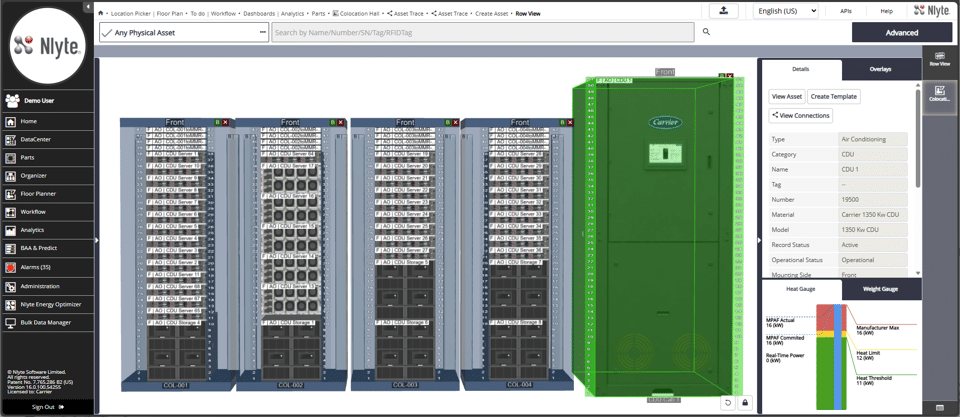
As data centers increasingly adopt liquid cooling technologies to support high‑density workloads, monitoring capabilities must evolve accordingly. The Nlyte 16.0.300 Release expands support for liquid cooling infrastructure with new device types and profiles designed specifically for Coolant Distribution Units.
New CDU Device Type
A new standard device type, COOLANTDISTRIBUTION, has been added to the platform. This device type enables more consistent and structured monitoring of CDUs within Energy Optimizer and System Utilization Monitor.
By standardizing how CDUs are represented, Nlyte makes it easier to integrate liquid cooling assets into existing monitoring and reporting workflows.
New Standard CDU Profiles
The Nlyte 16.0.300 Release introduces three new standard profiles for Coolant Distribution Units, offering flexibility for different deployment scenarios.
Carrier CDU 65LL – Extended
This profile provides comprehensive monitoring capabilities and supports both BACnet and Modbus protocols. It is well‑suited for environments that require detailed operational insight into CDU performance.
Carrier CDU 65LL – Core
Designed for essential monitoring needs, this profile also supports BACnet and Modbus while focusing on core operational metrics.
Nlyte‑CDU (Generic Profile)
This flexible profile is intended for non‑Carrier CDUs, allowing customers to monitor a wide range of liquid cooling solutions without requiring vendor‑specific profiles.
These additions reflect Nlyte’s continued investment in supporting modern data center cooling strategies and ensuring customers have the tools they need to monitor critical infrastructure effectively.
Why the Nlyte 16.0.300 Release Matters
The Nlyte 16.0.300 Release is more than a routine system update—it represents a thoughtful evolution of the platform to meet today’s operational realities. By enhancing device management, improving integration scalability, and expanding support for liquid cooling, this release helps organizations:
- Reduce operational risk through clearer feedback and logging
- Scale integrations more effectively as environments grow
- Gain better visibility into advanced cooling infrastructure
- Streamline workflows and reduce administrative overhead
At the same time, retiring legacy integrations ensures the platform remains focused, maintainable, and ready for future innovation.
Getting Started with Nlyte 16.0.300
Customers can begin taking advantage of the Nlyte 16.0.300 Release by upgrading their environments and reviewing the updated features within Asset Optimizer, Energy Optimizer, and System Utilization Monitor. As always, we recommend reviewing internal workflows and integrations to ensure alignment with the latest platform capabilities.
If you have questions about this release or would like guidance on adopting new features—particularly around liquid cooling monitoring—your Nlyte representative or support team can help ensure a smooth transition.
The Nlyte 16.0.300 Release continues our commitment to delivering a robust, future‑ready data center management platform. We look forward to seeing how these enhancements help you operate with greater efficiency, clarity, and confidence.